Dr. Brandi Revels

Research questions

How do elements move through the environment, become available to organisms, and leave a record of the processes that transformed them?

GEOCHEMISTRY

What sets the isotope signature of a river?

A shift in dissolved nickel isotopes downstream could reflect a change in the rocks being weathered, retention of nickel in newly formed oxides, or transport by colloids small enough to pass through a filter. I compare isotope ratios across size fractions and tributaries to test which processes account for the metal that ultimately reaches the ocean.

I can measure the same dissolved metal concentration at two sites even when different processes put it there. By separating particles and colloids and measuring their isotope ratios alongside the water, I can test whether a change reflects the source rock, weathering, or the transfer of a metal between those fractions.

My doctoral work at ETH Zürich investigated trace metals in Arctic and Amazonian river systems. My published studies of nickel and molybdenum in the Amazon Basin examine how weathering and partitioning between dissolved and particulate material affect delivery to the ocean.

Earlier work focused on particulate iron in the North Atlantic and on the chemical extraction methods used to measure its isotopic composition. Developing and evaluating analytical methods remains an important part of how I approach environmental questions.

Building the measurements

I developed filtration and enrichment procedures to separate particulate, colloidal, dissolved, and ultrafiltered fractions, along with chemical extraction and chromatographic separation methods for isotope analysis. My analytical experience includes single- and multicollector ICP-MS, double-spike methods, and standard-sample bracketing.

Method development is itself a scientific question. In my marine iron work, I investigated whether chemical leaching introduces isotope fractionation, comparing measured behavior with kinetic and equilibrium models. Establishing what a procedure measures is essential before using the result to interpret an environmental process.
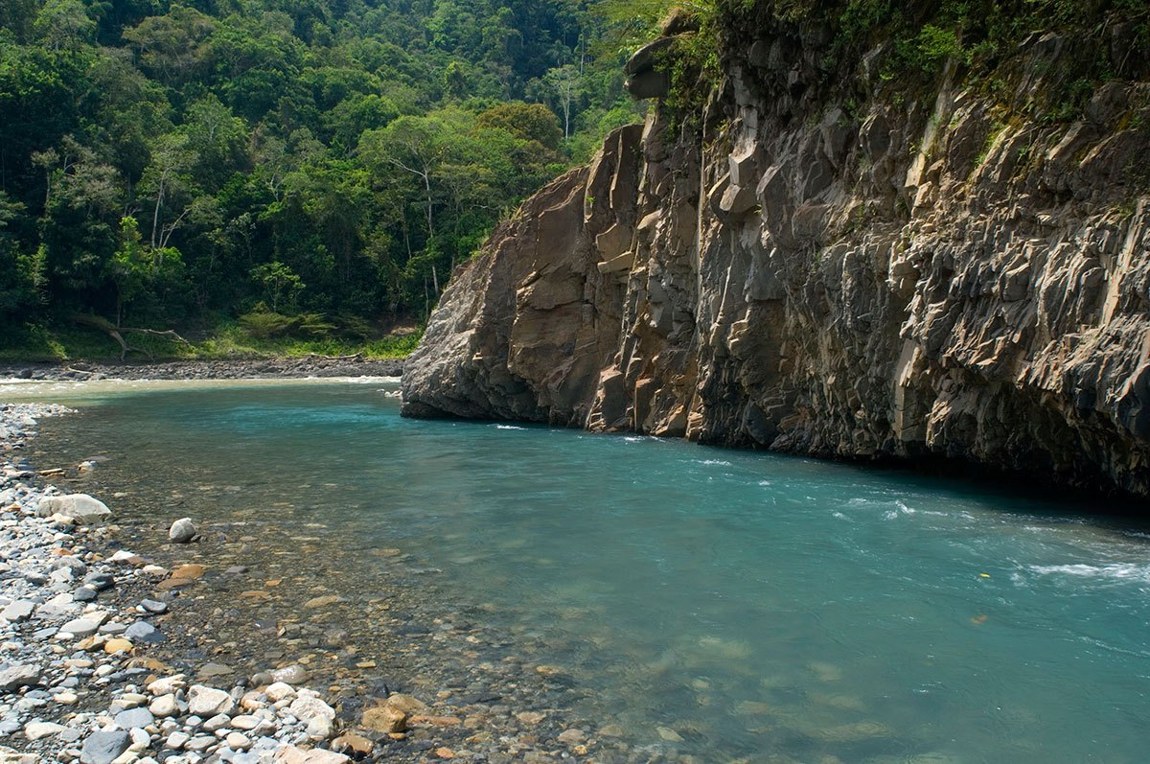
A riverbank in the Amazon Basin.

Iceatope · Polar biogeochemistry

Which metals reach polar ecosystems, and what controls their availability?

Water moving beneath ice reacts with rock and sediment before it reaches the sea. In Iceatope, I ask how that history shapes the metals a glacier delivers, and which fractions stay in suspension, bind to organic matter, or become available to microbes. Comparing elements with different responses to oxidation and mixing gives us a way to test competing explanations for the same plume.

A plume can entrain metal-rich seawater as it rises. To distinguish that source from glacial discharge, I compare metal concentrations, isotope ratios, and size fractions within independently identified water masses. Iron is one tracer in that comparison. Manganese, nickel, cobalt, and other metals can respond differently to the same conditions.

Explore Iceatope

Metals and marine carbon sinks

As a guest investigator at Woods Hole Oceanographic Institution, I developed research with Viking Expeditions aimed at quantifying the influence of transition metals on polar and global marine carbon sinks. The project combined shipboard sediment coring and water sampling with planned metal, carbon, and nitrogen analyses and synchrotron imaging.

A related research direction addressed metal-regulated carbon burial associated with melting permafrost. Together, these questions connect changes on land with the chemical conditions that influence how carbon is processed and retained in marine environments.

One open question is whether iron-bound organic matter survives burial. Resolving it requires tracking changes in both iron minerals and organic matter through the sediment column, where reduction can dissolve the phases that initially bound the carbon. At Cornell, my work within the Planetary Habitability and Technology group supports polar and oceanographic science.

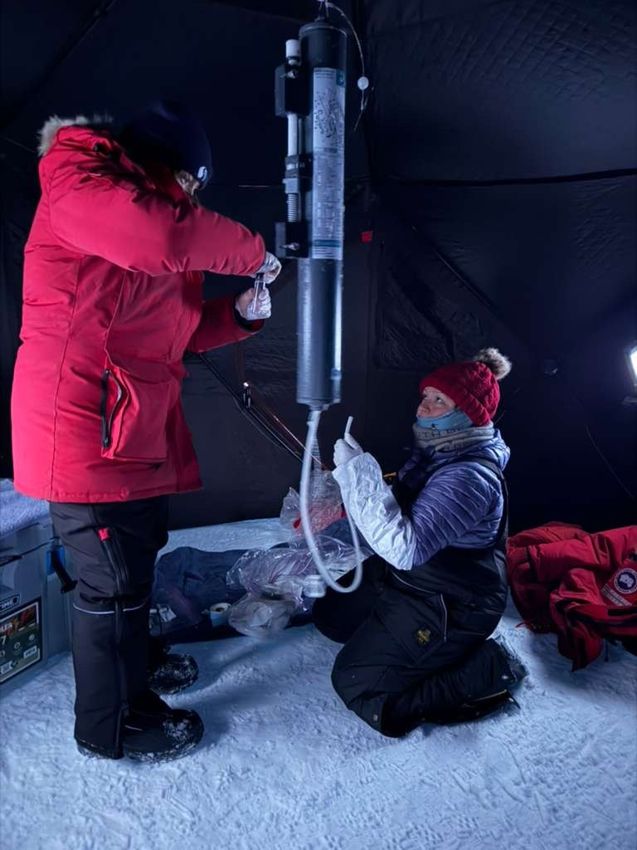
Handling samples inside the field tent in Greenland.

ASTROBIOLOGY

Which chemical signatures of habitability survive?

What interests me about habitability is the distinction between a metal being present in an environment and an organism being able to use it. That depends in part on the form the metal takes, which can change over a very short distance where two waters mix.

Metals are essential components of many enzymes. Reactions between water and rock can provide chemical energy. Hydrothermal systems and environments beneath ice offer ways to investigate these relationships on Earth and to ask informed questions about potentially habitable environments on ocean worlds such as Europa and Enceladus.

I am particularly interested in what minerals and isotope records preserve. Which signals reflect biological processes? Which can arise without life? How does alteration change the evidence? These questions connect my analytical background with the interpretation of environments on early Earth and beyond.

Analytical methods

What does a chemical leach actually measure?

To use particulate iron isotopes as a tracer, I first needed to know whether the extraction itself changed the isotope ratio. I compared acidic and near-neutral leaches of natural particles, then examined the iron released from particles collected across the North Atlantic, including the TAG hydrothermal plume. A related student project at ETH used electron microscopy to test whether selective leaching actually removed the iron–manganese coatings we thought we were measuring.

Read the iron isotope papers