Setting sail on a dream
University of South Carolina · My route from marine chemistry to expedition science.
I like giving people a chance to do the science with us.
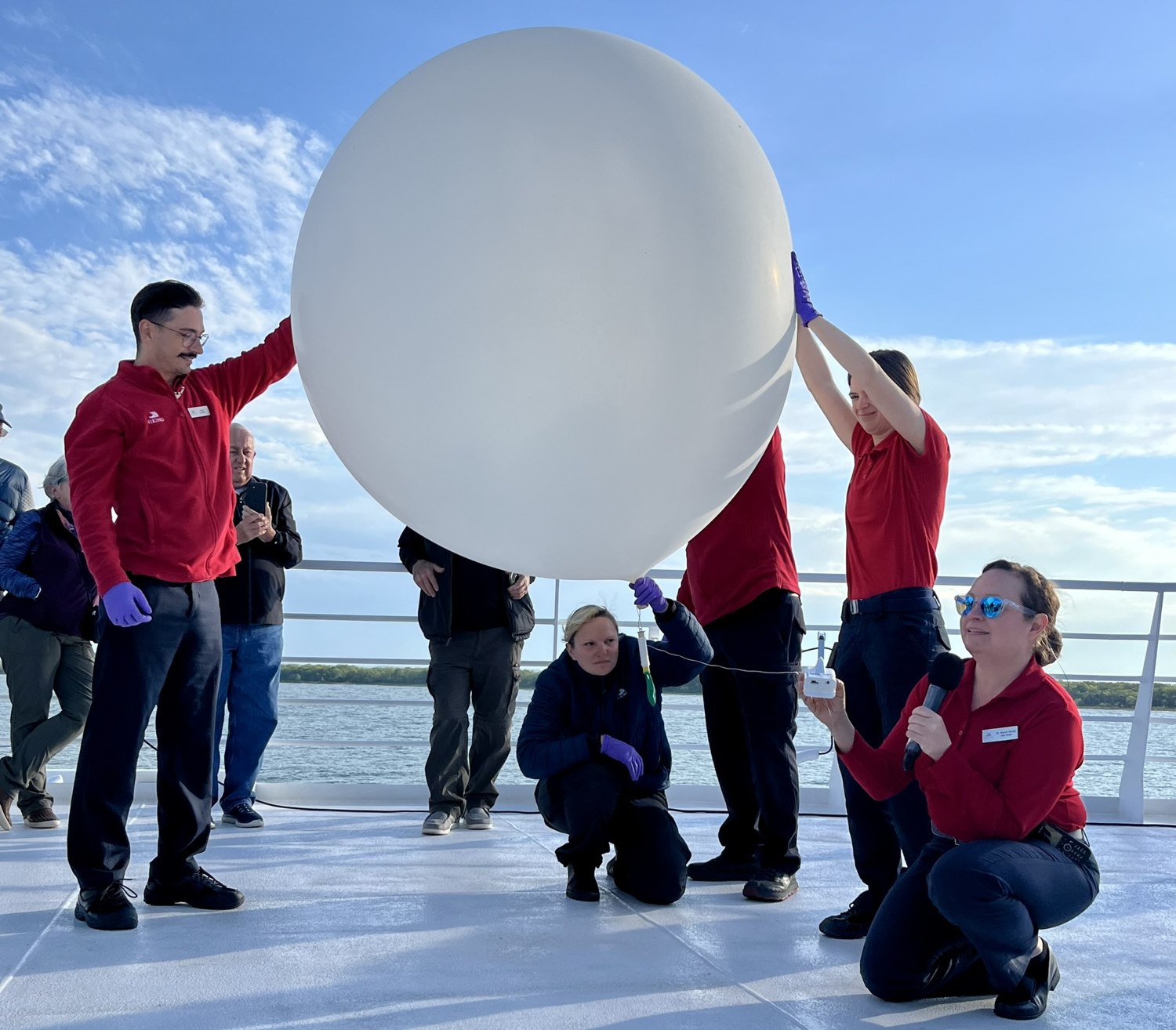
For the Fall/Winter 2025–26 issue of The Polar Times, I wrote about weather balloons and the atmospheric measurements they contribute to climate science. A balloon launch takes a few moments on deck. The observations it returns follow the atmosphere far beyond what we can see from the ship.
Read the American Polar Society’s feature ↗
I spoke with American Polar Society president Susan Adie about our plans for Greenland, how we take Icefin out onto the sea ice, and what water samples can tell us about the environment beneath it.
Find the interview in the society’s April 2026 issue ↗
Viking at the New York Stock Exchange · My appearance begins at 30:50.
Earth Sciences at ETH Zürich · My segment begins at 5:47.
In Tobago, I led dive teams surveying marine habitats and coauthored our 2009 presentation on coastal ecosystem mapping for the House of Assembly. I also founded a marine science summer school where young people could learn to swim, dive, and study the reefs along their own coast.
At the 2024 SCAR Open Science Conference in Chile, I gave an oral presentation on the “ah-ha” moment in expedition science. A guest who helps collect a sample often asks a different question once they’ve seen where that sample came from and how we handled it.
As a board member of Discover Cayuga Lake, I advised on vessel and laboratory design for freshwater research and public education. The same deck has to work for the person collecting a water sample and for the student seeing that measurement for the first time.
Aboard Viking Polaris, we could give a lecture on the atmosphere and then invite guests out on deck to watch us launch a weather balloon. Seeing the instrument disappear into the sky gave us a place to start talking about what it measured and why we wanted the profile.
I designed Expedition Central so that someone looking out the window of Viking Polaris could also see what our instruments were recording at that location. On submarine dives, an interactive iPad application gave guests another way to explore what they were seeing underwater.
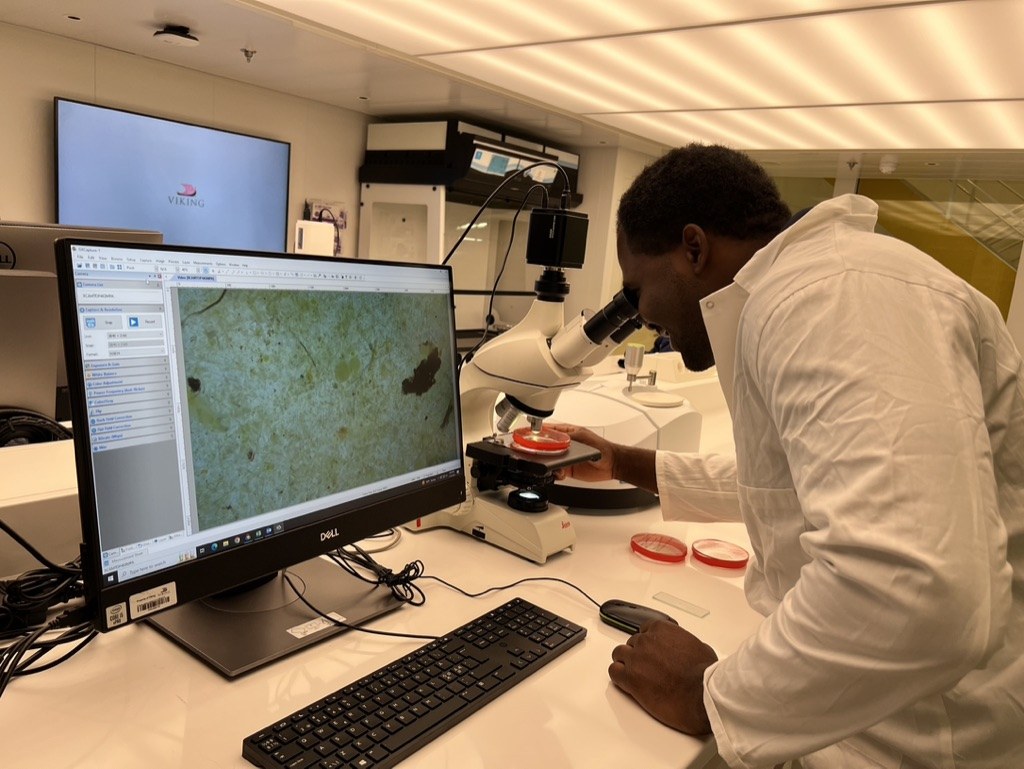
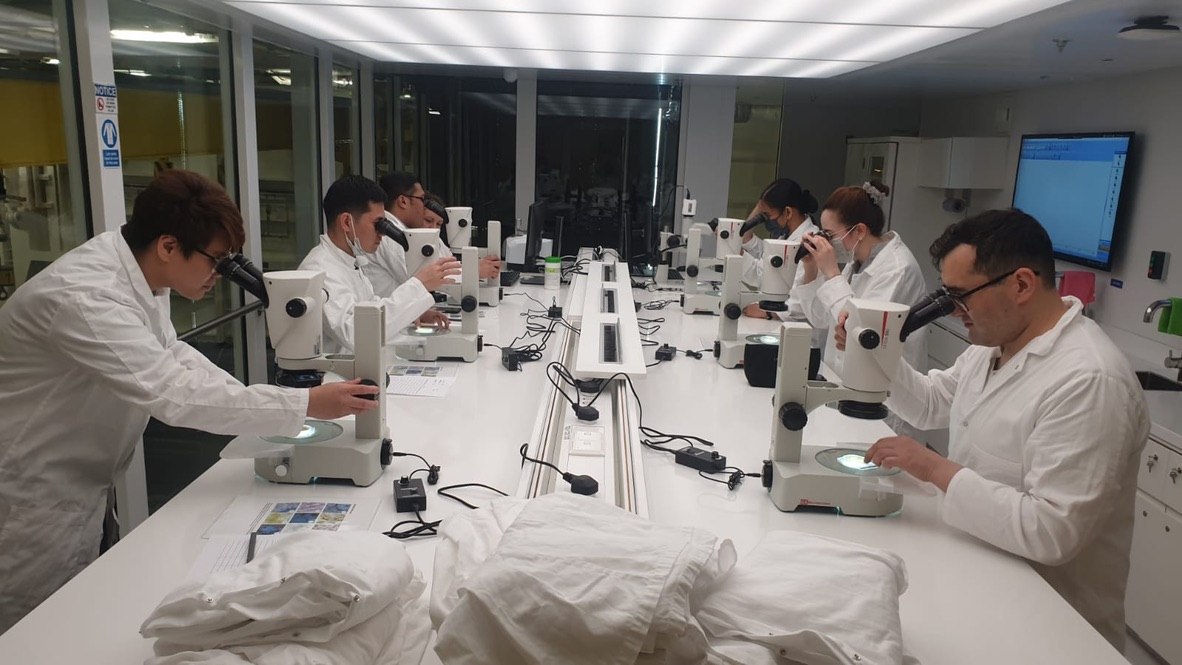
My teaching experience includes undergraduate marine chemistry laboratories, student research supervision, and conservation education in Tobago. Whether I am in a laboratory or on a ship, I want people to understand what we are trying to find out and how we investigate it.
Scientific communities also need places to learn from one another. I created What’s my PhD worth?, a funded series of seven interactive panel discussions about academic and nontraditional careers, engaging more than 100 participants.
I founded EqualiTea, workshops and lectures focused on equity in science, and the departmental Help!Desk, a volunteer mediation service intended to address conflicts between students and advisers early.
I also co-created a scientific and educational doctoral excursion to Colombia, bringing 27 doctoral researchers into exchanges spanning subjects from volcanology to coral reefs, with climate change and biodiversity as a shared theme.
Listen to my DoctorYou interview on careers after a doctorate in Earth sciences at ETH Zürich.
University of South Carolina · My route from marine chemistry to expedition science.
Condé Nast Traveler · Research, education, and daily life aboard an expedition vessel.
For speaking, teaching, or interview inquiries: bnrevels@gmail.com.