Isotopes
What can the isotopes of a metal tell us that its concentration alone cannot?
How much nickel, and which nickel?
A change in the concentration of an element can tell us that a process has occurred. The magnitude and direction of an isotope shift can help constrain the type and extent of that process. Consider a river in which the concentration of dissolved nickel falls downstream. Mixing with water that carries almost no nickel would dilute the river while scarcely changing its nickel isotope ratio. If secondary oxides instead take up nickel and preferentially incorporate its lighter isotopes, the concentration also falls, but the nickel left in solution becomes isotopically heavier.
Every nickel atom has 28 protons. Nickel-58 and nickel-60 differ by two neutrons, which gives them slightly different masses. Both are stable. I measure their relative abundance because chemical reactions can favor one isotope over another by a small but measurable amount. As a mineral dissolves or a new oxide takes up nickel, the water and the solids can acquire different isotope ratios.
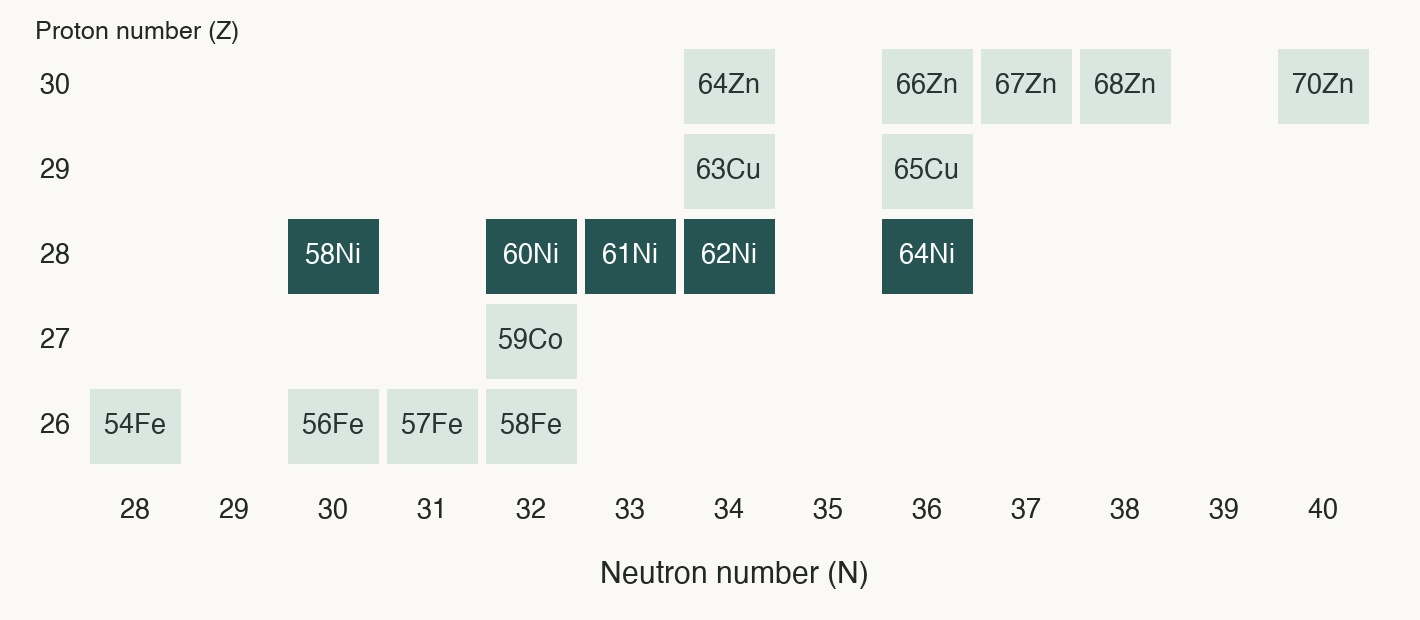
Explore the full IAEA chart of nuclides ↗
Following nickel through the Amazon
In the Amazon Basin, we compared tributaries draining different rocks and experiencing different weathering conditions. A change in dissolved nickel isotopes downstream could reflect mixing between tributaries or the removal of nickel from solution. Measuring nickel concentrations and isotope ratios together, and separating fine colloids from the water that carries them, helps us test those explanations.
Read our Amazon nickel study ↗
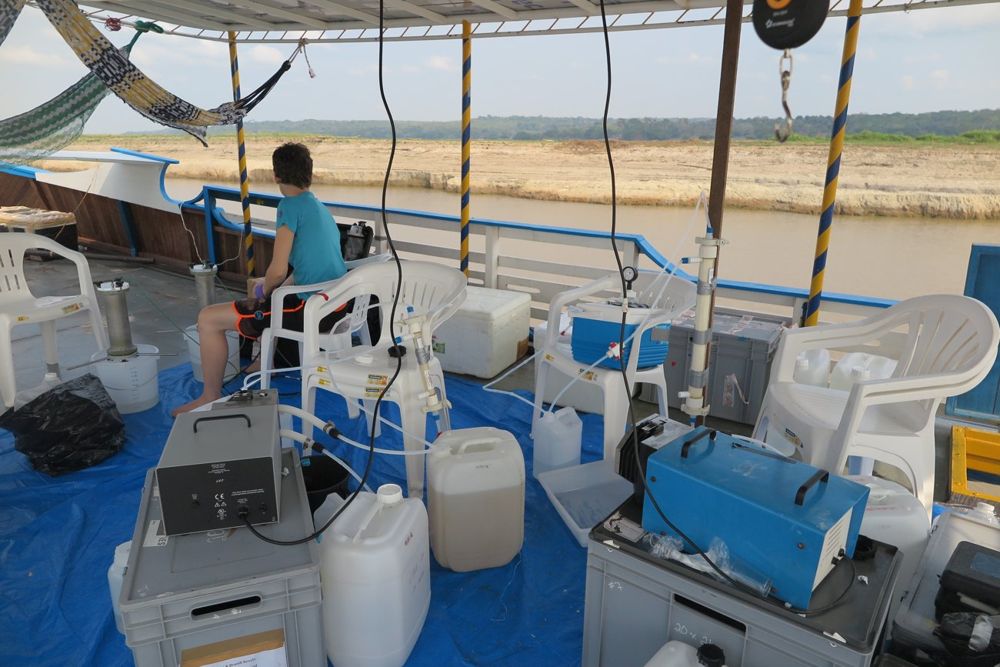
Measuring metals aboard a metal ship
At a dissolved iron concentration of 0.1 nanomoles per liter, a liter of seawater holds just 5.6 nanograms of iron. Another 5.6 nanograms from a fleck of rust that dissolves during handling would double the concentration we report. On a steel ship, the challenge begins before the sample reaches the laboratory. A wire passing through the water, dust settling on an open bottle, or a reagent used during extraction can all introduce the very metal we are trying to measure.
That is why I build clean workspaces in the field. An enclosure gives us a place to open bottles and filter water away from deck dust. Acid-cleaned bottles and clean sampling gear protect the sample on its way there. We carry blanks through handling and analysis to measure what our own procedure contributes.
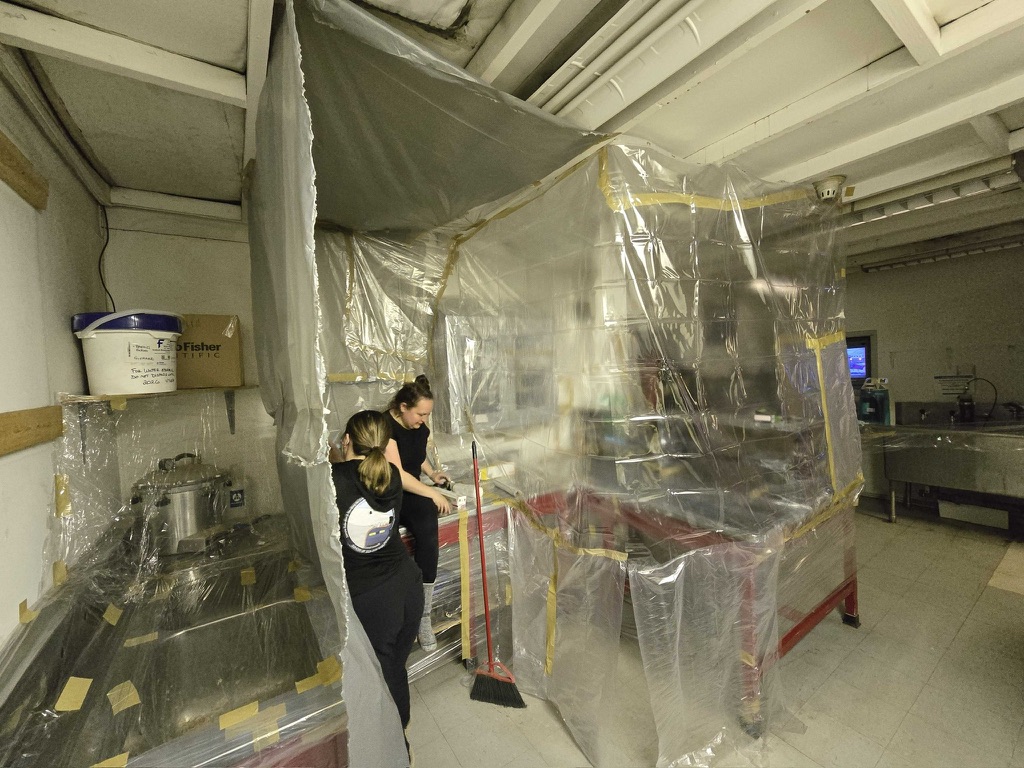
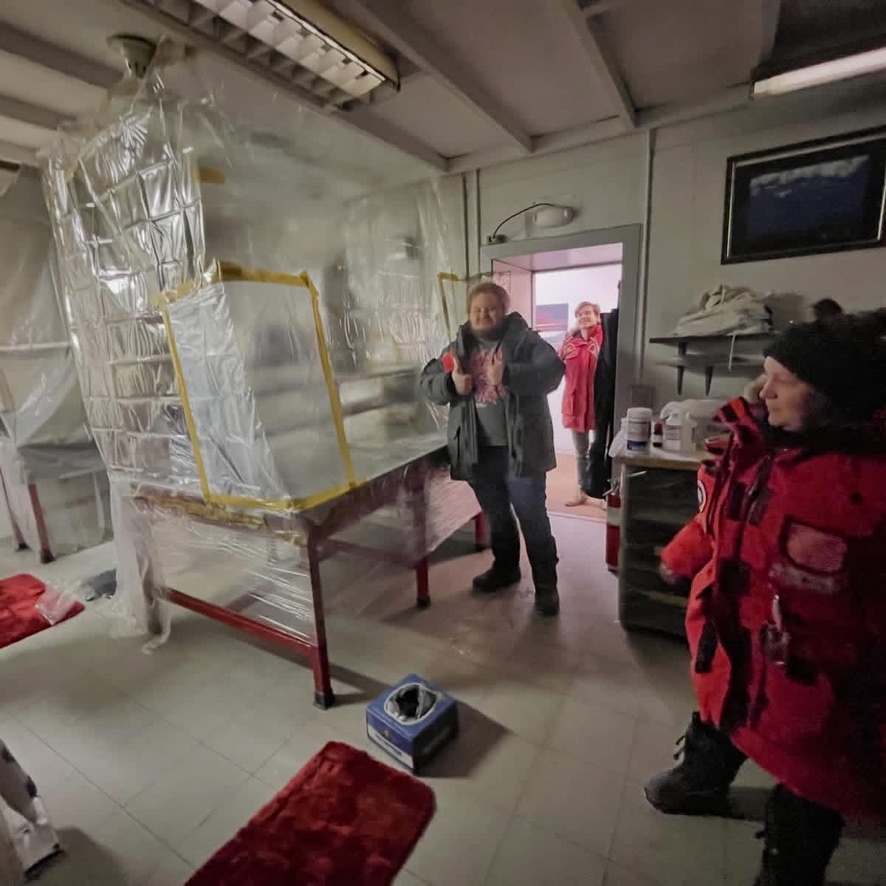
GEOTRACES sampling protocols ↗
When the chemistry happens in the lab
Working on particulate iron in the North Atlantic, I wanted to know which fraction of a particle a chemical leach actually dissolved. If the extraction itself favors one isotope, some of the signal we measure can come from the reagent we chose. We compared leaches on natural particles before applying that approach to samples from the GEOTRACES transect.
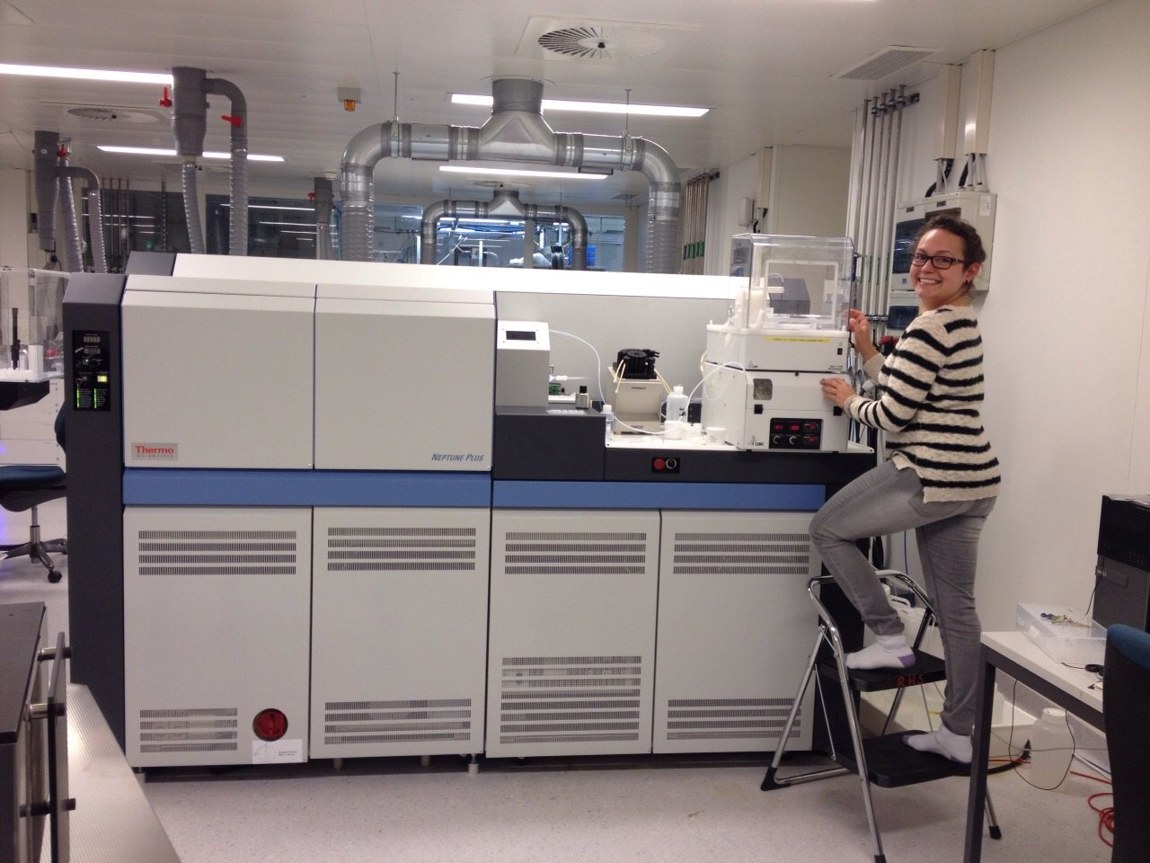
Read our iron leaching study ↗
What that means for habitability
Under a glacier, water can react with bedrock, mix with seawater, and carry metals already bound to particles. Several of those processes can leave similar isotope signals. Before I interpret a signature as evidence of conditions that could support life, I want to know which reactions could produce it without biology, and whether we can distinguish them with the minerals, water chemistry, and particles we collected alongside it.